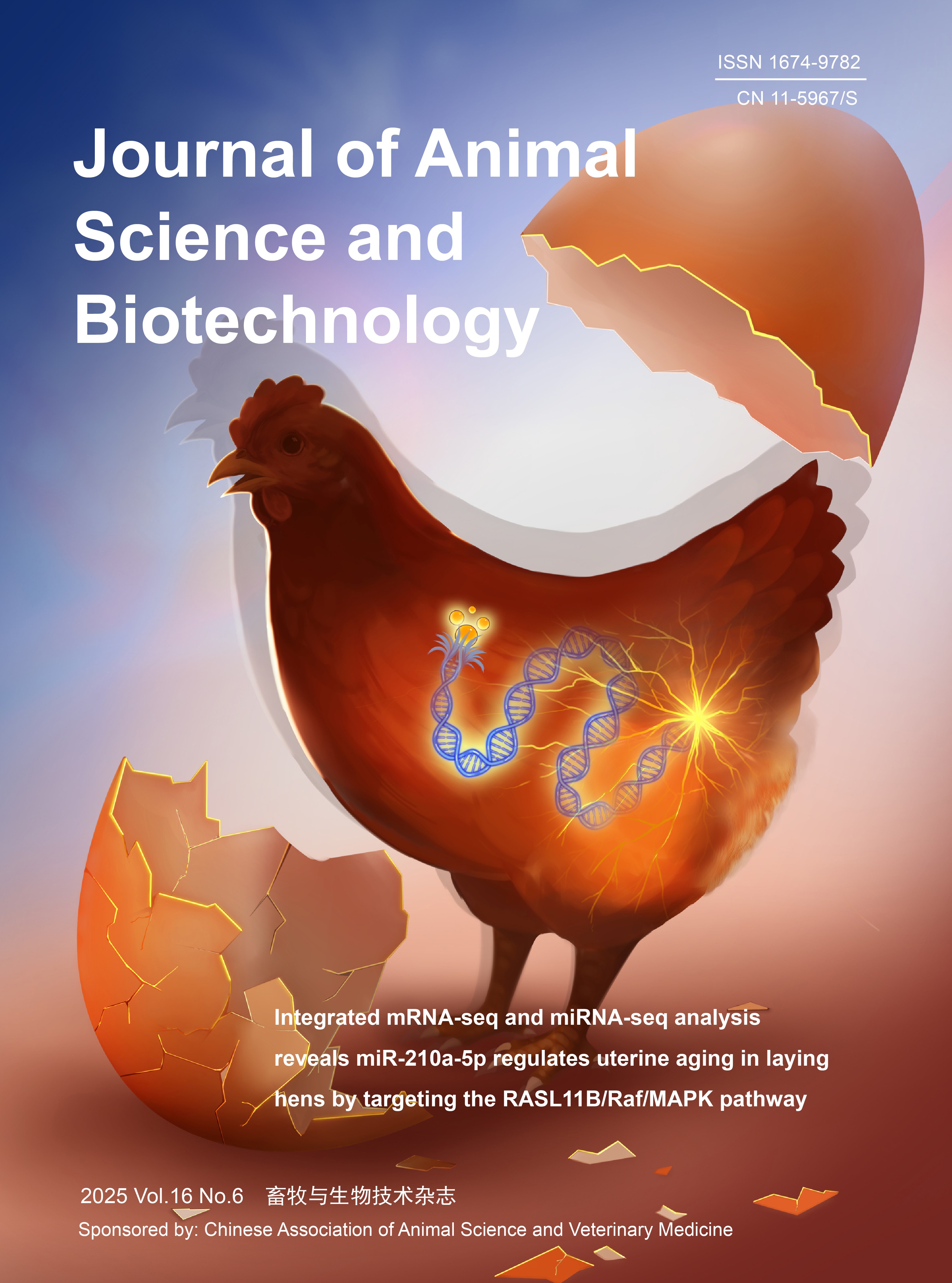
Journal of Animal Science and Biotechnology - Volume 15, Issue 3

Volume 17, Issue 1

Year 2026

Click to enlarge

Vol. 17, No. 1 • Year 2026

33

Articles

3

Categories

200

Views

0

Downloads

Full Issue PDF

Complete journal

Table of Contents

Article list

Browse Issues

2026, Vol. 17 (1)
Quick Jump:

Articles in This Issue

Research Vol.17 No.1, Year 2026, pp. 0.

Dietary β-hydroxy-β-methyl butyrate supplementation improves intestinal health and growth performance in Tibetan sheep lambs via modulating small intestinal microbiota

Tibetan sheep grazing on the Qinghai-Tibet Plateau require dietary protein supplementation; however, they face economic constraints due to the high cost of feed transportation in this region. Given th

📅 February 9, 2026👁️ 4 views 📥 0 downloads
Research Vol.17 No.1, Year 2026, pp. 0.

Comparative metagenomic and metatranscriptomic analyses reveal the role of the gayal rumen and hindgut microbiome in high-efficiency lignocellulose degradation

The gayal (Bos frontalis), a semi-domesticated bovine species, demonstrates exceptional adaptability to lignocellulose-rich diets dominated by bamboo, suggesting the presence of a specialized gastroin

📅 February 2, 2026👁️ 5 views 📥 0 downloads
Research Vol.17 No.1, Year 2026, pp. 0.

Piceatannol enhances antioxidant capacity and growth in weaned piglets by regulating of Nrf2-mediated redox homeostasis and modulating of the related gut microbiota

Piglets are highly susceptible to oxidative stress, which can reduce growth performance and cause intestinal damage. Piceatannol (PIC), a natural bioactive substance enriched in Chinese rhubarb (Rheum

📅 February 1, 2026👁️ 4 views 📥 0 downloads
Research Vol.17 No.1, Year 2026, pp. 0.

Combination of bacteriophage–probiotics alleviates intestinal barrier dysfunction by regulating gut microbiome in a chick model of multidrug-resistantSalmonellainfection

The rapid emergence of multidrug-resistant Salmonella in poultry demands alternative control strategies beyond conventional antibiotics. In this study, we evaluated a combination of lytic Salmonella-i

📅 January 23, 2026👁️ 9 views 📥 0 downloads
Research Vol.17 No.1, Year 2026, pp. 0.

Impact of zearalenone on quorum sensing signaling molecules and its association with the suppression of ruminal microbial fermentation in a RUSITEC system

Zearalenone (ZEN), a common mycotoxin in ruminant diets, could disturb the rumen ecosystem and impair rumen fermentation. Noticeably, ZEN has been shown to reduce the relative abundances of specific b

📅 January 24, 2026👁️ 5 views 📥 0 downloads
Research Vol.17 No.1, Year 2026, pp. 0.

Strategically isolated bacteriophages targeting ETEC K88 (F4) alleviate post-weaning diarrhea in piglets via modulation of gut microbiota and inflammatory responses

Post-weaning diarrhea (PWD) in piglets, primarily caused by enterotoxigenic Escherichia coli (ETEC) K88 (F4) infection, presents a major challenge in swine production. This study aimed to isolate bact

📅 January 18, 2026👁️ 5 views 📥 0 downloads
Research Vol.17 No.1, Year 2026, pp. 0.

Targeted analysis of sphingolipids and cytokines in plasma of dairy cows after calving reveals distinct impacts of systemic inflammation, ketosis, and mastitis

Sphingolipids (SL) are key regulators of inflammatory processes, yet their roles in dairy cows remain poorly understood. This study investigated the effects of inflammation (plasma haptoglobin concent

📅 January 12, 2026👁️ 4 views 📥 0 downloads
Research Vol.17 No.1, Year 2026, pp. 0.

Multiomics analysis reveals that chlorogenic acid alleviates heat stress-induced oxidative damage in prepubertal boar testes via the BLVRA-GPX3 pathway: in vivo and in vitro evidence

Heat stress (HS) can impair boar testicular function, leading to reproductive issues. However, chlorogenic acid (CGA) has been shown to mitigate HS-induced damage in various livestock and poultry spec

📅 January 13, 2026👁️ 4 views 📥 0 downloads
Research Vol.17 No.1, Year 2026, pp. 0.

Fecal microbiota transplantation mitigates lipopolysaccharide-induced oxidative stress in weaned piglets by modulating gut microbiota and enhancing riboflavin metabolism

During the weaning phase, piglets are exposed to significant physiological and environmental stressors, which disrupt the balance of their intestinal microbiota and often lead to severe diarrhea. Prev

📅 January 16, 2026👁️ 4 views 📥 0 downloads
Research Vol.17 No.1, Year 2026, pp. 0.

Multi-omics profiling of chromatin accessibility and H3K27ac reveals super-enhancer–mediated regulatory networks governing endometrial receptivity in goats

Endometrial receptivity (ERE) is a transient uterine state that determines the success of blastocyst implantation; however, the epigenomic regulation underlying ERE establishment in goats remains uncl

📅 January 9, 2026👁️ 5 views 📥 0 downloads